

AI Lead Generation Tools: How to Automate Prospecting & Lower CPL
Key Takeaways
- Understand the landscape of modern ai lead generation tools and where they fit in a full prospecting stack (data, enrichment, scoring, outreach).
- See a concrete, implementation-focused workflow that compares manual prospecting vs AI-powered lead discovery, with realistic time savings and CPL impact.
- Learn why most DIY stacks underperform and how AiBizBuild’s done-for-you workflows (B2B Lead Scraping & Enrichment, Cold Outreach Automation, CRM Integration & Inbox Management, AI Voice Agents, Appointment Systems) turn tools into booked meetings and predictable ROI.
In This Guide:
- 🔍 The Modern AI Lead Gen Landscape – Where ai lead generation tools actually fit in your funnel
- 🧱 Building an AI-Powered Lead Gen Stack – Data sources, enrichment, scoring, and outreach
- ⚖️ Manual Prospecting vs AI Automation – Time, CPL, and scalability compared
- ⚠️ Why DIY AI Lead Gen Stacks Fail – Hidden integration, data, and deliverability traps
- 🧪 Use Case: B2B SaaS Outbound Engine – A full workflow from scraped list to booked demo
- 📈 Cost, ROI, and Payback Period – How to model savings vs agency fees
- 🤝 How AiBizBuild Implements AI Lead Generation – Done-for-you services, timelines, and next steps
- ❓ FAQs – Implementation, security, and integration questions answered
B2B founders and sales leaders are drowning in lists of ai lead generation tools and conflicting Reddit advice. The real leverage does not come from yet another tab in your browser, but from a tightly orchestrated system that moves prospects from raw data to booked meetings with minimal manual effort.
This guide walks through how ai lead generation actually fits into your funnel, what a modern stack looks like, and how AiBizBuild’s done-for-you implementation turns noisy tools into a predictable outbound engine.
The Modern AI Lead Gen Landscape
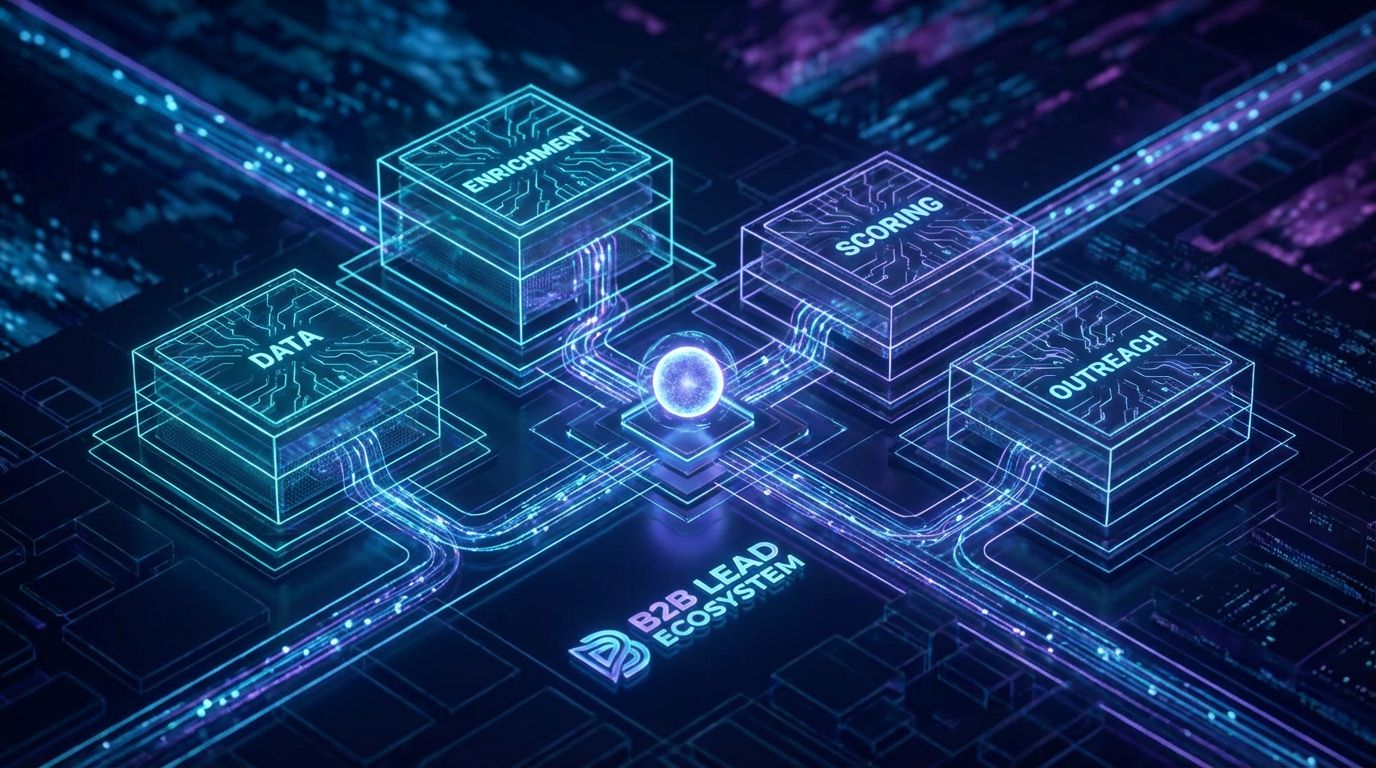
AI lead generation is not just “more leads from ads”; it is about using automation, data, and models to find, enrich, and engage the right accounts on autopilot. Instead of SDRs manually hunting LinkedIn and spreadsheets, lead generation with AI builds a repeatable pipeline from intent to meeting.
When we talk about ai lead generation tools, we are talking about categories like AI-enhanced data providers, enrichment APIs, AI-based lead scoring, AI copy and personalization engines, AI voice agents, and routing logic that keeps everything in sync with your CRM. Together, these form ai powered lead generation systems that lower CPL and free reps to focus on conversations.
Where AI Fits in the B2B Lead Funnel
A modern B2B funnel can be mapped as: Targeting → Data Capture → Enrichment → Scoring → Outreach → Routing → Follow-up. At each step, ai tools for lead generation automate repetitive work and improve accuracy.
- Targeting: Define ICP and segment lists based on firmographics, technographics, and triggers.
- Data Capture: Scrape and aggregate prospects from LinkedIn, directories, review sites, and intent sources.
- Enrichment: Append emails, phone numbers, tech stack, and revenue data with enrichment APIs.
- Scoring: Use rules or models to prioritize high-fit, high-intent leads.
- Outreach: Trigger AI-personalized email, LinkedIn, and SMS sequences.
- Routing: Push qualified responses to the right rep in your CRM.
- Follow-up: Use AI voice agents and automated reminders to chase replies and no-shows.
Each stage can leverage ai in lead generation, but none of them will work in isolation without a coherent system design and feedback loop.
Why “Just Buying a Tool” Rarely Moves the Needle
Most teams fall into the “tool trap”: they buy an ai lead generator, connect it to a list, and expect meetings to appear. What they get instead is another silo of data, inconsistent messaging, and more dashboards that nobody trusts.
Tools are at best 30–40% of the solution; the remaining 60–70% is process design, integration, governance, and continuous optimization. AiBizBuild’s role is to design and operate that end-to-end engine, so you are not duct-taping tools together and hoping for the best.
Building an AI-Powered Lead Gen Stack
There is a big difference between owning random ai lead generation software and running a deliberate, revenue-linked lead gen system. The first gives you logins and complexity; the second gives you measurable reductions in CPL and CPQM.
AiBizBuild focuses on architecting ai based lead generation stacks where each component has a clear job, clear inputs and outputs, and is monitored against real sales outcomes rather than vanity metrics.
Core Components of an AI Lead Generation System
Component 1: B2B Lead Scraping & Enrichment (AiBizBuild)
Instead of SDRs spending hours a day hunting for prospects, we configure B2B lead scraping flows across LinkedIn, company websites, directories, and review sites. These flows pull in accounts and contacts that match your ICP and convert unstructured web data into structured records.
We then apply lead generation using AI to enrich those records with firmographic, technographic, and contact-level details, using enrichment APIs and custom logic. The result is a constantly refreshing, high-quality lead pool that is ready for scoring and outreach.
Component 2: Scoring & Prioritization with AI
Once leads are enriched, we use rules and lightweight models to assign scores based on ICP fit, buying signals, and engagement history. This is where lead generation ai starts to pay off, because your SDRs no longer treat every contact the same.
High-scoring accounts get faster, higher-touch sequences and human follow-up, while lower scores feed slower nurture programs. This prioritization is what lets using AI for lead generation scale without burning your domains or your team.
Component 3: Cold Outreach Automation (AiBizBuild)
Cold Outreach Automation turns static lead lists into active conversations. We set up multi-channel sequences (email first, optionally layered with LinkedIn and SMS) that are timed, throttled, and personalized.
AI models generate and customize copy based on role, industry, tech stack, and recent events, so each prospect gets messages that feel written for them. Instead of SDRs writing every email, they are monitoring reply quality and jumping into live opportunities.
Component 4: 24/7 Appointment Booking Systems & AI Voice Agents (AiBizBuild)
Good replies still die if you rely on manual back-and-forth to book meetings. We wire in booking links, routing rules, and calendar logic so prospects can self-schedule with the right rep in a few clicks.
AI voice agents then extend your capacity by handling warm callbacks, basic qualification, and no-show rescheduling. This turns ai powered lead generation into actual calendar events, not just more replies sitting in an inbox.
Component 5: CRM Integration & Inbox Management (AiBizBuild)
Without clean data, you cannot measure CPL or CPQM accurately. Our CRM Integration & Inbox Management ensures every lead, touchpoint, reply, and stage change is synced back into systems like HubSpot, Salesforce, Pipedrive, or Close.
We also build inbox triage rules and automations so that positive replies, referrals, and “not now” responses are routed and tagged correctly. This closes the loop between ai tools for lead generation and the pipeline your executives actually see.
Example Tool Categories (Without Going Full Review Mode)
To keep this guide strategy-first, here are the core categories in a mature ai for lead generation stack. The exact tools matter less than how they are wired together and governed.
- Lead Databases: Provide broad coverage of companies and contacts but rarely match your ICP out of the box.
- Scrapers & List Builders: Pull targeted lists from LinkedIn, review sites, and niche directories.
- Enrichment APIs: Append emails, phone numbers, employee counts, tech stack, and funding data.
- Sequencers / Outreach Platforms: Orchestrate multi-step email, LinkedIn, and SMS campaigns.
- AI Copy & Personalization Engines: Generate and adapt messaging at scale from a central playbook.
- AI Dialers & Voice Agents: Automate outbound and inbound calls for qualification and follow-up.
- Calendar & Routing Tools: Manage scheduling, meeting ownership, and load balancing across reps.
- CRM & Analytics: Serve as the single source of truth for pipeline, CPL, and revenue attribution.
None of these categories, alone, is a complete ai lead generation solution; you need a system owner to connect them to revenue.
Manual Prospecting vs AI Automation

Manual prospecting and lead generation with AI are not just two tools; they are two different operating models. One relies on human effort for every step, while the other uses humans for judgment and AI for repetitive, rules-based work.
Understanding the difference in time, CPL, and scalability makes it clear why many teams can replace an extra SDR hire with a well-designed automation system.
The Old Way – Manual Prospecting
In a manual model, an SDR spends hours a day searching LinkedIn, copying data into spreadsheets, guessing emails, and sending one-off messages. CRM updates are inconsistent because they are done at the end of the day, if at all.
A typical rep might only source and contact **100–150 leads per week**, with a high cost per lead once you factor in salary and overhead. The result is unpredictable pipeline, slow testing cycles, and leadership flying blind on real CPL and CPQM.
The New Way – AI-Powered, Systematized Lead Gen
In an automation-first model, scrapers and enrichment flows run daily or weekly to keep your target lists fresh. Leads are scored automatically, then fed into pre-defined sequences that personalize messaging at scale.
Reps spend their time on calls, demos, and high-intent conversations, not data entry or research. Many teams see **10–20 hours per rep per week** freed up and a **20–50% reduction in CPL** when they fully embrace ai lead generation tools in a systemized way.
Manual Outreach vs AI Outreach (Comparison Table)
| Factor | Manual Prospecting | AI-Powered Lead Generation |
|---|---|---|
| Time to Source 100 Leads | 4–6 hours of SDR time | 15–30 minutes of automated workflows |
| Estimated CPL | $70–$120 including labor and tools | Lower by 20–50% due to automation |
| Personalization | Shallow, limited by rep time | Deep, AI-driven at scale (company & persona-specific) |
| Scalability | Constrained by team headcount | Scales to thousands of prospects with similar effort |
| Operational Risk | High variance, inconsistent CRM logging | Structured workflows with monitoring & safeguards |
Why DIY AI Lead Gen Stacks Fail
Most B2B teams approach ai based lead generation as a DIY project: buy a few tools, watch some YouTube videos, and have an SDR “own” it off the side of their desk. This usually results in tool sprawl, inconsistent data, and no clear owner for results.
AiBizBuild is intentionally the opposite: a done-for-you architect and operator that treats your outbound machine like a product with requirements, roadmaps, and SLAs.
Tool Sprawl and Fragmented Data
It is common to see teams running 5–10 disconnected tools across scraping, enrichment, outreach, and spreadsheets, plus a CRM that is only partially used. Different reps export and import their own lists, creating overlaps and gaps.
The impact is duplicated contacts, conflicting fields, and no trustworthy reporting on what actually drives pipeline. You also end up paying for unused licenses because nobody has a holistic view of your ai lead generation software stack.
Hidden Technical Complexity (Deliverability, Domains, Compliance)
Once you start scaling ai lead generation, technical details like SPF, DKIM, DMARC, sending limits, and bounce management become critical. A single misconfigured domain can tank your sender reputation and kill deliverability for months.
DIY setups often overlook compliance considerations, opt-out handling, and regional regulations. AiBizBuild designs workflows with deliverability and compliance guardrails, so your ai in lead generation does not accidentally become a liability.
Strategy and Messaging Gaps
Even the best AI copy tool cannot invent your positioning, pricing model, or offer strategy. If your ICP is fuzzy and your offer is generic, lead generation using AI will simply help you send bad messaging faster.
Our approach starts with ICP clarity, problem framing, and offer design, then uses AI to scale a playbook that already works. This is how we increase qualified replies rather than just raw send volume.
DIY SaaS vs AiBizBuild (Comparison Table)
| Dimension | DIY SaaS-Only Approach | AiBizBuild Done-for-You Implementation |
|---|---|---|
| Setup Time | 2–6 months of trial-and-error configuration | Structured 30/60/90-day rollout with milestones |
| Internal Resources Needed | Founder, SDR, and ad-hoc “RevOps” juggling tools | Client provides ICP and feedback; AiBizBuild handles builds |
| Predictability of Results | Highly variable, dependent on in-house expertise | Systematic, data-driven iterations tied to meetings and CPL |
| Ongoing Optimization | Occasional tweaks when someone has time | Continuous monitoring, A/B testing, and workflow tuning |
| Ownership of Outcomes | No clear owner; tools are “just there” | Dedicated automation architects accountable for performance |
Use Case: B2B SaaS Outbound Engine
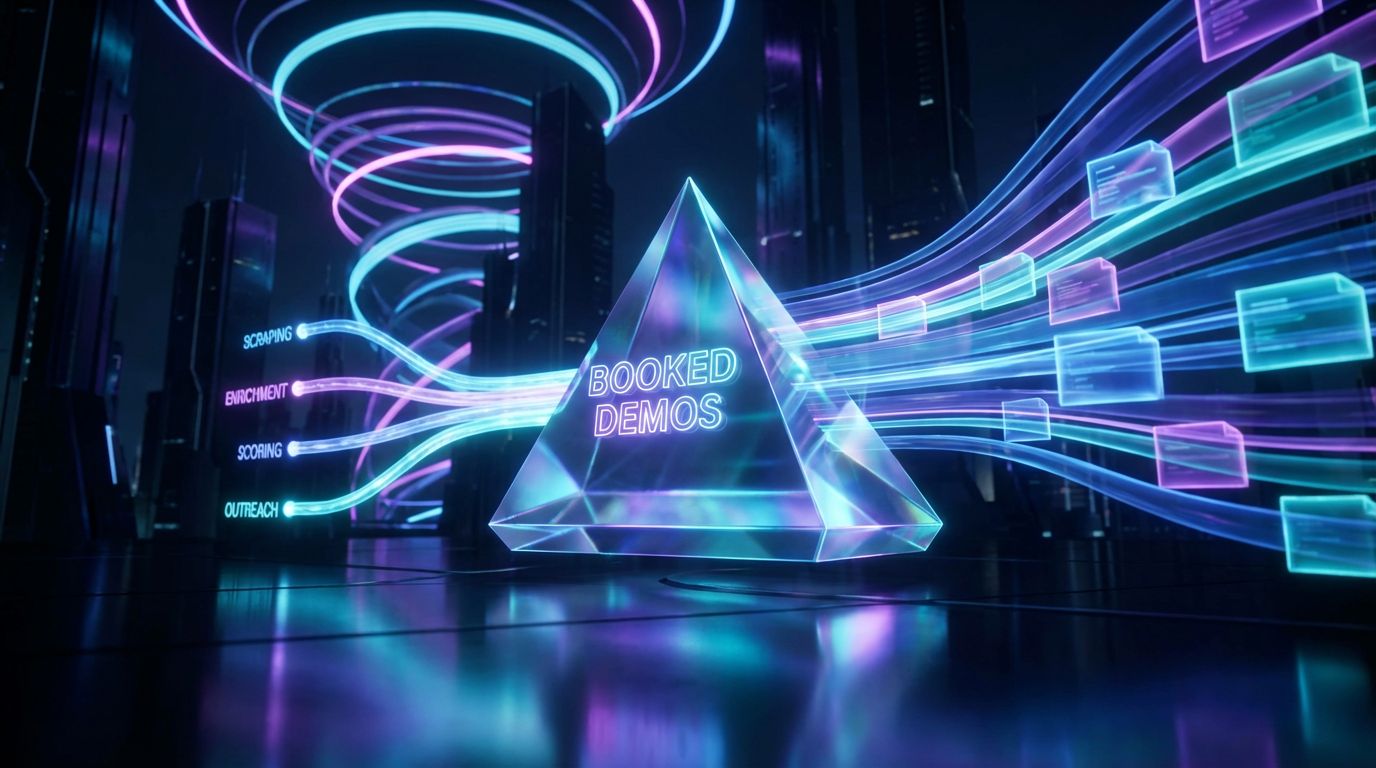
To make this concrete, let us walk through a typical client profile. Imagine a 15-person B2B SaaS company selling a $10–30k ACV product, with 1–2 SDRs and a founder still involved in sales.
They have some inbound and a warm LinkedIn network but very little structured ai for lead generation, and they are unsure which ai lead generation tools to trust or how to connect them.
Scenario Overview
Right now, their outbound is sporadic: spreadsheets of prospects, manual LinkedIn DMs, and a basic email tool with no real segmentation. CPL is hard to calculate, but leadership knows SDRs are spending more time on research than on calls.
The goal is to build a predictable outbound engine that can generate **15–25 qualified demos per month** in 60–90 days without hiring more full-time headcount.
Step-by-Step AI Lead Generation Workflow
Here is a narrative workflow that would typically be shown as a diagram (see the flow illustration in your mind: ICP → scraping → enrichment → scoring → outreach → routing → CRM → meeting booked). Each step is owned and automated where possible.
Step 1: ICP Definition & Target List Strategy
We start by defining clear firmographic and technographic criteria: industry, employee range, geography, tech stack, and key triggers like funding or hiring signals. We also define which personas (titles and departments) are primary and secondary buyers.
This becomes the blueprint for every subsequent automation, ensuring that lead generation using AI does not drift into generic mass outreach.
Step 2: B2B Lead Scraping & Enrichment (AiBizBuild)
Next, we configure scraping workflows to pull accounts and contacts from LinkedIn, review platforms, and curated lists. The system runs on a schedule, constantly refreshing and expanding the target universe.
We enrich each record with contact details, revenue, employee count, technology signals, and relevant tags. This is where ai tools for lead generation convert raw lists into usable, high-resolution lead data.
Step 3: AI-Based Lead Scoring & Segmentation
We assign scores based on ICP fit and any available intent or engagement signals. Leads are segmented into A/B/C tiers, with A-tier accounts getting the highest-touch outbound sequences.
This segmentation ensures your SDRs and founders are spending their limited time on the most promising accounts while lower tiers move through automated nurture.
Step 4: Cold Outreach Automation (AiBizBuild)
We build distinct sequences for each segment, industry, and persona group. AI personalizes subject lines, opening lines, and case study references based on company attributes and role.
The system staggers sends to protect deliverability and quickly surfaces positive replies and meeting requests. From the team’s point of view, lead generation with AI feels like having multiple virtual SDRs running in the background.
Step 5: 24/7 Appointment Booking Systems & AI Voice Agents (AiBizBuild)
Every sequence includes frictionless booking options that route prospects to the right AE or founder calendar. Logic can prioritize certain reps for specific segments or regions.
AI voice agents handle callbacks from interested leads, answer basic qualifying questions, and help reschedule no-shows. This keeps momentum high even when your human team is offline.
Step 6: CRM Integration & Inbox Management (AiBizBuild)
All leads, activities, and outcomes sync into your CRM, with pipelines configured to reflect stages from “New” to “Won”. Replies are categorized (interested, referral, not now, unsubscribe) and handled according to your rules.
This unified dataset lets you see the full funnel impact of your ai lead generation system, from cost per lead to pipeline per segment.
Expected Impact on Meetings and CPL
For a B2B SaaS company at this stage, moving from manual outbound to a systematized engine often increases outbound meetings from **2–3 per month** to **15–25 per month** within 60–90 days. This assumes consistent ICP input and sales follow-through.
Because scraping and enrichment are automated and SDRs focus on conversations, it is common to see **CPL drop by 25–40%** while CPQM improves due to better fit. That creates room to reinvest into other acquisition channels like scalable SEO content generation to build a full-funnel engine.
Cost, ROI, and Payback Period
To justify any investment in ai lead generation tools, you need to understand the real cost of your current manual approach. That includes not only software and salaries but also the opportunity cost of delayed pipeline.
AiBizBuild helps you quantify this upfront so that the shift to ai powered lead generation can be evaluated like any other strategic investment.
Modeling the True Cost of Manual Prospecting
Start with your SDR’s fully loaded hourly rate (salary, benefits, overhead). If an SDR costs **$50/hour** and spends **15 hours per week** on research and manual list building, that is **$3,000+ per month** in non-selling time.
Add the cost of point tools, bounced domains, and missed follow-ups, and the effective CPL is often much higher than expected. This is before accounting for slower learning cycles because fewer experiments are run per month.
How AI Lead Generation Tools Change the CPL Equation
When you automate scraping, enrichment, scoring, and much of the outreach, the labor hours required per 100 leads drops dramatically. At the same time, better targeting and personalization improve conversion rates at every stage.
Properly orchestrated lead generation AI means you are not just getting more leads; you are getting more of the right leads at a lower blended CPL and CPQM, which compounds over quarters.
Sample CPL & CPQM Before vs After Automation
| Metric | Before (Manual) | After (AiBizBuild AI Workflows) |
|---|---|---|
| Cost Per Lead (CPL) | $80–$120 | $45–$75 (25–40% reduction) |
| Cost Per Qualified Meeting (CPQM) | $600–$1,000 | $350–$650 with better targeting |
| Qualified Meetings / Month | 2–5 | 15–25 after 60–90 days |
These are directional, conservative ranges meant to illustrate how ai lead generation software shifts both unit economics and volume when part of a well-run system.
Payback Timeline for Done-For-You Implementation
Assume your average deal size is $15,000 and your close rate on qualified meetings is 20%. If an AI-powered system adds **10 extra qualified meetings per month**, that is roughly **2 new deals**, or **$30,000 in additional monthly pipeline value**.
In this scenario, a done-for-you engagement can often pay for itself within the first 1–3 closed deals, typically within the initial 90-day rollout. The key is that this is achieved without adding permanent headcount or overloading your existing team.
How AiBizBuild Implements AI Lead Generation
AiBizBuild is not another SaaS tool; it is your automation and outbound systems team packaged as a service. We specialize in turning scattered ai lead generation tools into a coherent revenue engine.
Our work spans strategy, architecture, implementation, and ongoing optimization, so your internal team can focus on closing deals rather than wrestling with integrations.
Our Done-for-You Services for Lead Gen
- B2B Lead Scraping & Enrichment: Continuous, ICP-driven list building and enrichment from multiple sources.
- Cold Outreach Automation: Multi-channel sequences with AI personalization and deliverability safeguards.
- AI Voice Agents (Inbound/Outbound): Automated qualification, callbacks, and no-show recovery.
- 24/7 Appointment Booking Systems: Smart routing and frictionless scheduling across calendars and teams.
- CRM Integration & Inbox Management: Unified data, reply handling, and reporting across your stack.
Beyond outbound, we can also extend your engine into inbound demand using social media workflow automation, creating a synchronized acquisition system.
30/60/90-Day Implementation Roadmap
Days 1–30: We run a workflow audit, clarify ICPs, map your current stack, and design target architectures. Initial scraping, enrichment, and basic outbound workflows go live for 1–2 high-priority segments.
Days 31–60: We expand segment coverage, layer in deeper AI personalization, refine scoring models, and tighten CRM and inbox integrations. Early performance data guides quick iterations on messaging and cadence.
Days 61–90: We double down on what is working, A/B test sequences, and roll out AI voice agents and more advanced appointment flows where appropriate. At this stage, we also formalize dashboards and governance, including any necessary content approval workflows for larger teams.
What You Need to Bring (and What We Handle)
You bring deep understanding of your ICP, existing CRM and email infrastructure access, brand guidelines, and the sales capacity to handle more meetings. You also provide feedback on lead quality and messaging resonance.
We handle system design, tool selection, automation builds, integration work, QA, monitoring, and optimization. In other words, we own the machinery so you can own the conversations.
CTA – Book a Workflow Audit
If you are tired of guessing which ai lead generation tools to duct-tape together, the next step is simple. Book a Workflow Audit or Request a Demo, and our Senior Automation Architects will map your current funnel, identify quick wins, and estimate potential CPL and CPQM improvements.
Instead of sinking months into DIY experiments, you get a clear, implementation-ready roadmap for ai lead generation that turns into measurable pipeline in 90 days.
FAQs
- How long does it take to implement an AI-powered lead generation system?
Most AiBizBuild engagements follow a structured 30/60/90-day rollout. You will see initial workflows live in the first 30 days, significant optimization and segment expansion by day 60, and a mature, data-driven system by day 90. - Do we need a dedicated RevOps or technical team to use AI lead generation tools effectively?
No. With AiBizBuild’s done-for-you model, you do not need in-house automation engineers or RevOps specialists to run ai lead generation. Your main responsibilities are providing ICP clarity, access to existing tools, and sales capacity to handle the increased volume of qualified meetings. - What CRMs and tools can AiBizBuild integrate with?
We commonly integrate with major CRMs such as HubSpot, Salesforce, Pipedrive, and Close, along with popular email and outreach platforms. As part of our CRM Integration & Inbox Management service, we design around your existing stack wherever possible rather than forcing a rip-and-replace. - Is AI-based lead generation compliant and secure?
Yes, when designed correctly. We build workflows with data protection, opt-out handling, domain reputation, and regional regulations in mind, and we configure your systems to respect suppression lists and unsubscribe requests. - How do you measure success and ROI from AI lead generation?
We focus on hard metrics like qualified meetings per month, reply and positive response rates, CPL, CPQM, and sales pipeline created and closed. These are reported via your integrated CRM dashboards so leadership can see exactly how ai in lead generation is impacting revenue.
Ultimately, the question is not whether you should use AI in your lead gen; it is whether you want to own the complexity yourself or have a specialized partner design and run the system for you. AiBizBuild exists so you can choose the latter and get to results faster.